Hi, I’m Sarah.
I'm a Neuroplastic Recovery Coach, Clinical Pilates Practitioner, and someone who has lived with chronic pain and persistent symptoms— and found a way through it. This is my story.
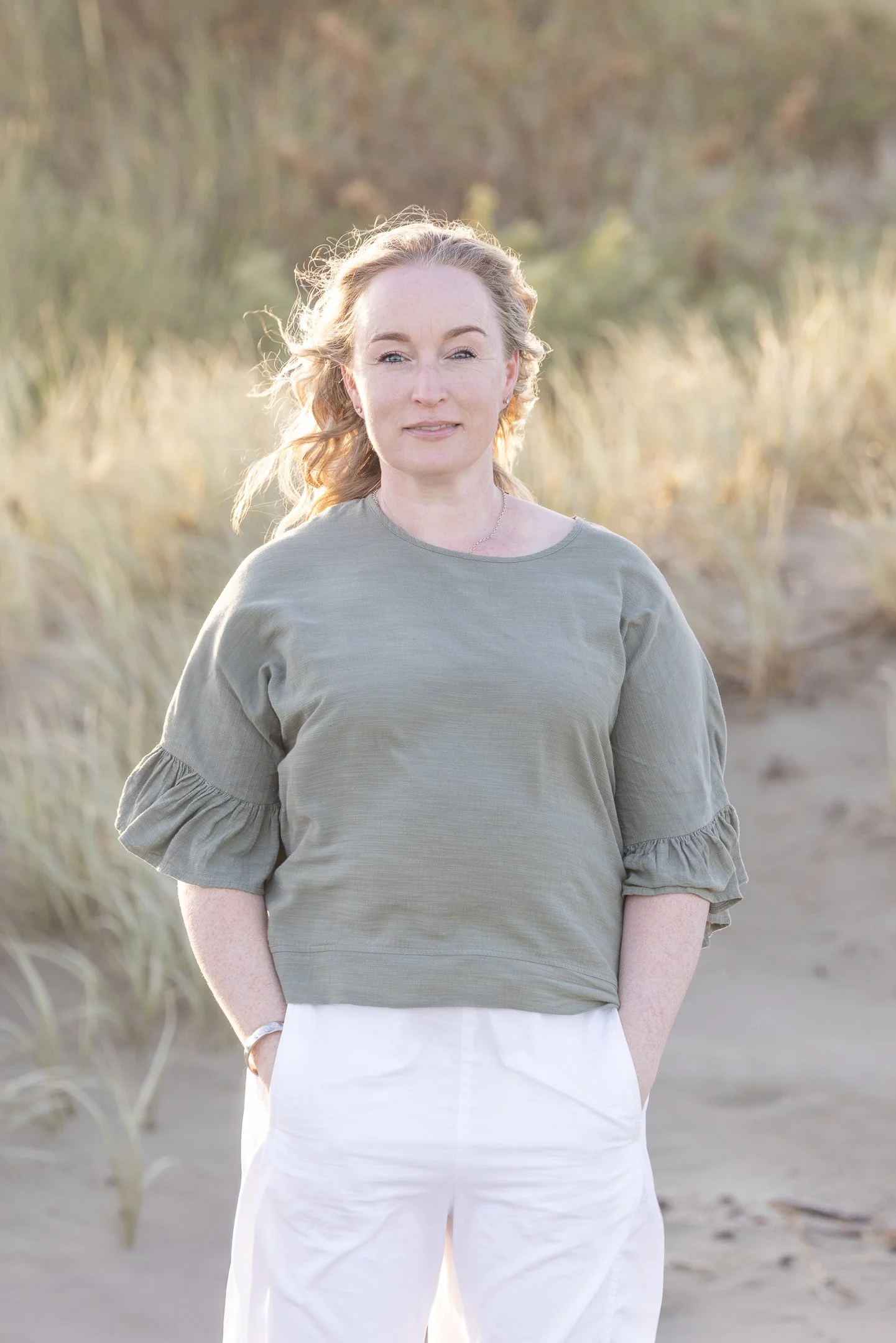
I've been inspired by movement for as long as I can remember. At age six, I found my place in the ballet studio, and from that moment, I spent my childhood and adolescence dedicated to perfecting my love of dance and performance.
During my full-time ballet training, I discovered Pilates — and was immediately drawn to its potential as a powerful tool for movement and rehabilitation. I trained in Australia under the internationally-recognised Stott Pilates Method, and in 2004 I opened Pulse Pilates, one of Christchurch's first Clinical Pilates studios.
For over twenty years, Pulse Pilates has been a respected provider of clinical and rehabilitative Pilates in Christchurch. I've had the privilege of working with a wonderfully diverse range of clients — from professional athletes and dancers to children and the elderly. To me, Pilates has never been just exercise. It's a way to educate movement, helping people regain strength, mobility, and confidence in their bodies.
But in 2014, everything changed.
Movement has always been my world
Finding the missing piece
Having always been interested in the mind-body connection, I began researching the neuroscience of chronic pain. I found the work of Dr John Sarno and Dr Howard Schubiner — pioneering figures in the field of neuroplastic pain recovery. From there, I researched everything I could find about others who had healed from chronic pain.
I was of the opinion that if one other person could heal from chronic pain, so could I.
The more I learnt about neuroscience, neuroplasticity, and the mind-body connection, the more my pain began to ease. Over three months of dedicated, self-directed work — podcasts, journal articles, books, YouTube — I found my way out. It wasn't an easy path, and there were genuinely tough times as I worked to retrain my brain.
I've learnt that healing isn't a linear journey. Once I understood that pain was a protective mechanism my brain had developed to keep me safe, I stopped fearing it. And when the fear left, so did much of the pain.
Because I couldn't find someone who truly understood what I was going through, I had to become that educator for myself. I couldn't find a chronic pain coach or neuroplastic recovery practitioner in New Zealand who could help me. I've had to learn a great deal of self-compassion — to give myself space to heal, to be kind to myself. And I've become genuinely thankful for my pelvic pain. I never thought I would say that.
"Our painful experiences aren't a liability — they are a gift. They give us perspective and meaning, an opportunity to find our unique purpose and our strength."
— Edith Eger
Ten years of searching for answers
In 2014, I developed chronic pelvic pain. I did what everyone does when something starts to hurt — I went to the doctor. I expected a diagnosis, some treatment, and to get better. But no one knew what was wrong with me.
What followed was ten years of hope and disappointment. Doctor after doctor. Physiotherapy, osteopaths, acupuncture, pain specialists. Each time I saw someone new, I would arrive with hope — that this time, someone would finally be able to help me. The crushing realisation that each new modality wasn't the answer left me more and more disillusioned, and beginning to lose all hope.
I was eventually diagnosed with pudendal neuralgia. I was given multiple medications, nerve blocks, and eventually surgery. Although surgery helped, my pain then shifted locations to my tailbone. The only remaining medical suggestion was to remove my tailbone.
I was also suffering from other chronic conditions. Anxiety, fatigue, and a growing list of food sensitivities. I felt like my body was failing me.
I decided there had to be another way.
I can tell you, from the other side, that you can get better.
I've changed my understanding of the source of my pain, and I am continuing to learn how to prevent my body from producing pain in response to the stresses of everyday life.
There is a way out of chronic pain and persistent symptoms. It won't always be perfect, far from it. But you can learn to live your life again. You can break the connection between your nervous system and your physical pain. And you can start using your energy to rebuild your life rather than simply survive it.
That is why I trained in these Chronic Pain and Neuroplastic Recovery techniques — to become the practitioner I so desperately needed but couldn't find.
I wanted to do for others what no one was able to do for me.
No one should have to navigate this journey alone.
Training and Qualifications
My approach is grounded in over two decades of clinical practice and formal training in the most current evidence-based approaches to chronic pain recovery.
I specialise in working with patients living with chronic pain and persistent symptoms, including conditions such as anxiety and Long Covid.
Neuroplastic Recovery
Certified in Pain Reprocessing Therapy (PRT) — an evidence-based approach, supported by peer-reviewed research including the landmark 2021 Boulder Back Pain Study published in JAMA Psychiatry.
Trained in Emotional Awareness and Expression Therapy (EAET) — developed by Dr Howard Schubiner and Dr Mark Lumley, integrating emotional processing with nervous system recovery.
Movement and Rehabilitation
Fully certified by STOTT PILATES — one of the world's most respected Clinical Pilates training programmes.
Over twenty years of experience in clinical and rehabilitative Pilates, working with a wide range of conditions and populations.
Why this work matters
"If we can appreciate that pain is a protective device, not a measure of tissue damage, if you can communicate that to people, then we can change the game."
— Dr Lorimer Moseley — Pain Neuroscientist
This is exactly what I believe. And it is exactly what I try to do in every session: communicate clearly, compassionately, and with the full weight of the science behind me, that your pain is real, that it is not your fault, and that recovery is possible.
Ready to talk?
If my story resonates with you — if you recognise yourself in the years of searching, the hope and disappointment, the quiet wondering whether things will ever change — I'd love to talk with you.
A free 45-minute discovery call is a relaxed, no-pressure conversation where you can share what you've been going through, ask any questions you have, and get a feel for whether working together could be right for you. There's no obligation and no hard sell — just an honest conversation between two people who both want you to get better.
Sessions are available in person in Christchurch and online across New Zealand and beyond— so wherever you are located, we can work together.
Or reach out directly: sarah@prehab.nz | 021 316 710